
Research progress
NIH overview: tissue repair in preclinical mouse studies
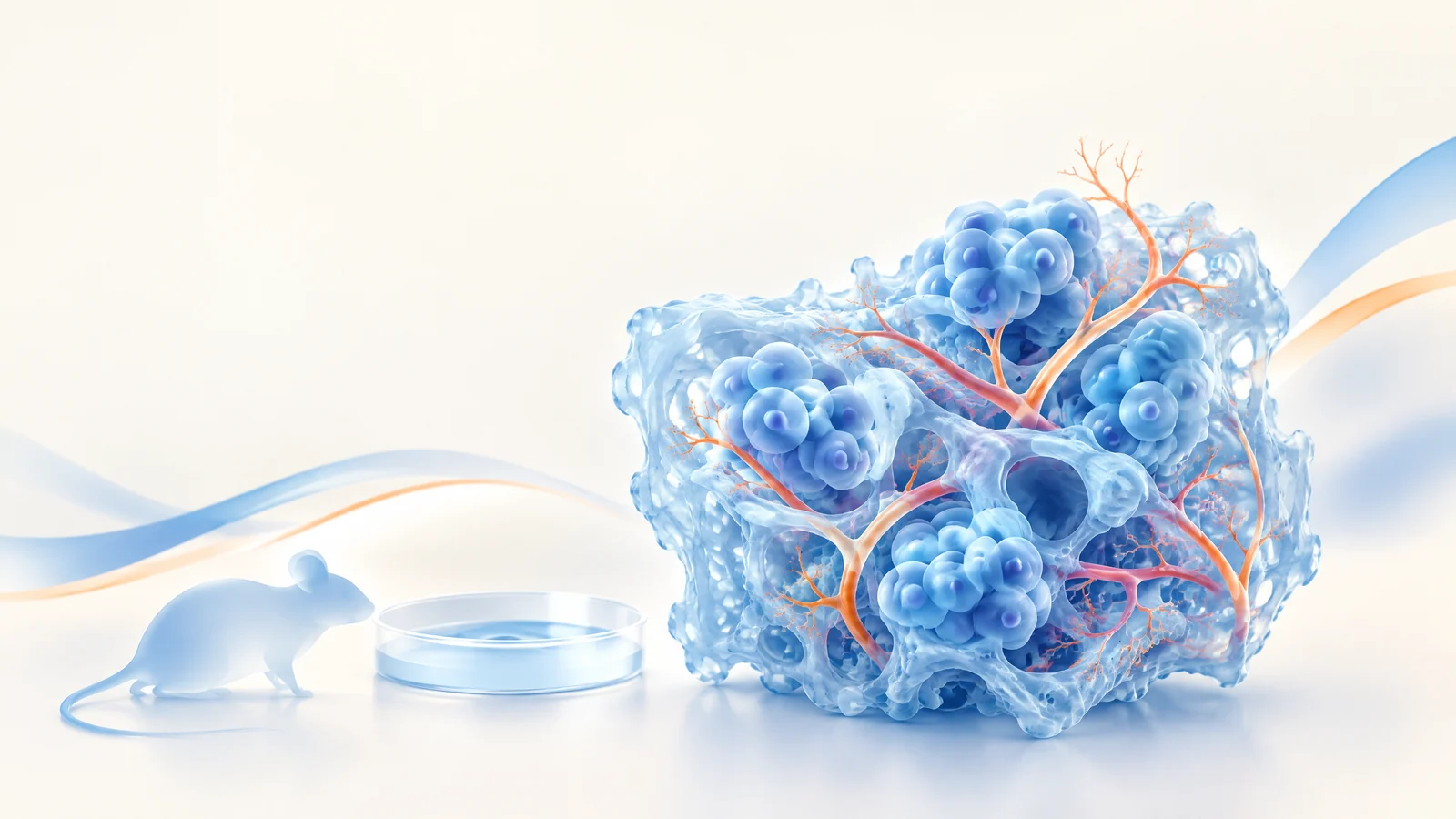
A recent NIH overview explains older mouse studies on muscle healing and engineered liver tissue, with human benefits and safety still unproven.
AI-assisted summary and sourcing. Official and research sources are linked below; this article is informational and is not personal medical advice.
CareNews
Key takeaways
- The recent NIH overview describes earlier research in mice, not a new human trial.
- Experimental materials and engineered tissue offer different ways to study healing.
- Benefits, safety, and the ability to produce enough tissue for people remain unproven.
Understanding repair, not just scar formation
Tissue regeneration aims to replace damaged tissue. The NIH overview explains that inflammation and blood vessels both play a part in healing. Scar tissue can provide support without doing the normal work of an organ. Researchers are studying how to encourage repair that goes beyond forming a scar. Growing whole organs in a laboratory remains a distant goal.
Sources for this section: NIH — Tissue regeneration to help healing
Exploring growth of engineered liver tissue
The liver study was published on April 17, 2026, in Science Advances. Researchers combined methods for controlling cell behavior with tissue engineering. They expanded human liver tissue in laboratory culture and after implantation in mice. This work explores control over tissue growth, but it did not test a treatment in people or create a complete liver ready for transplantation.
Sources for this section: NIH — Tissue regeneration to help healing, Science Advances / PubMed — Synthetic control of implanted engineered liver tissue growth
Studying immune cells in muscle healing
The muscle study appeared online on October 23, 2023, in Nature Materials; its print issue followed in January 2024. In a mouse muscle-injury model, experimental materials attracted immune cells involved in regulating the healing response. The study examined how these cells influence scarring. It offers clues about immune-guided repair, rather than proof that the same approach will help people.
Sources for this section: NIH — Tissue regeneration to help healing, Nature Materials / PubMed — Pro-regenerative biomaterials recruit immunoregulatory dendritic cells after traumatic injury
Sources